
“The Unstoppable Machine”, etc. (276-280)

Welcome to Fragmentarium! Each issue contains five fragments of text that can be read independently of one another. However, all of the fragments are connected (from #1 onward), so the more of them you read, the more whole they will become.
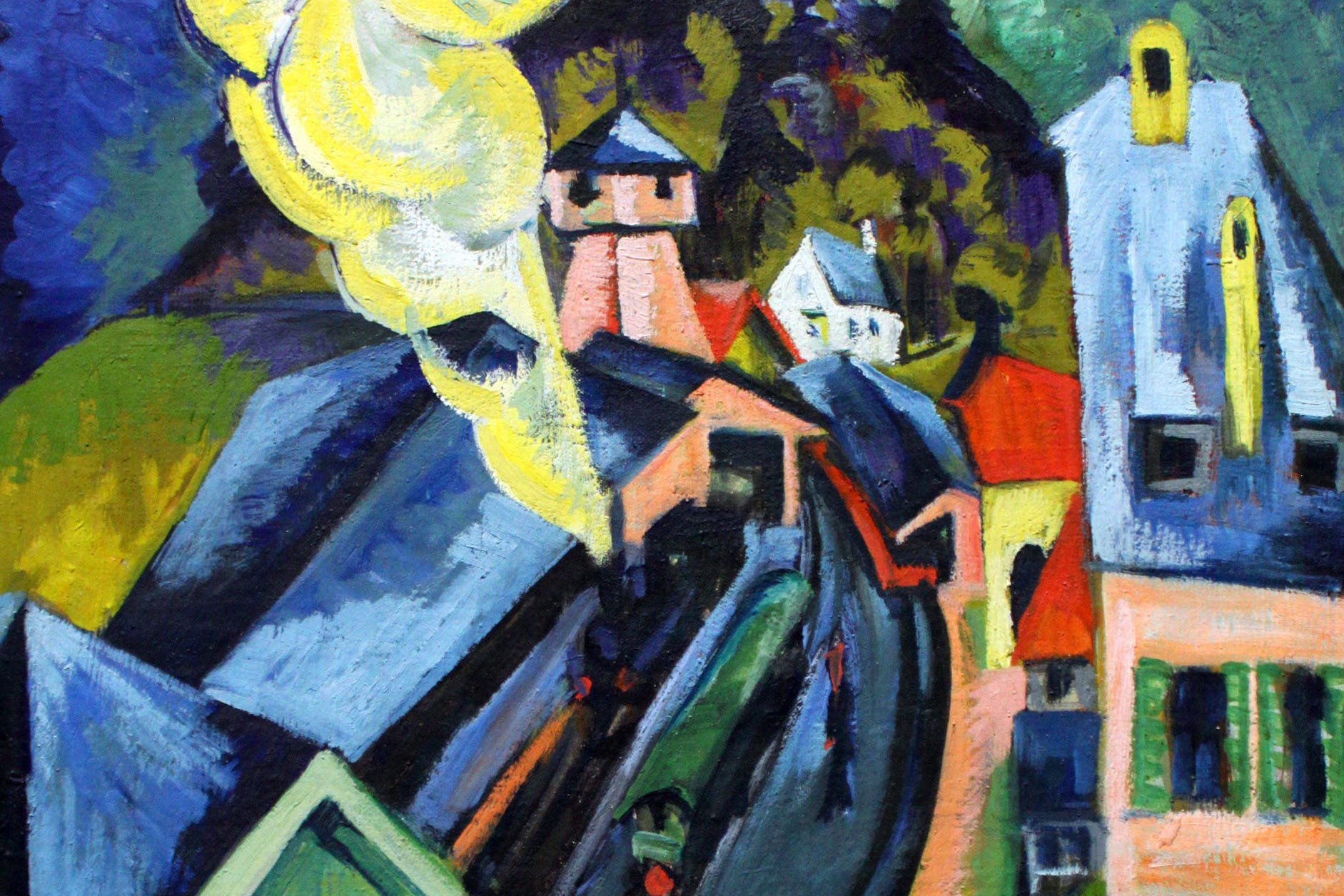
276. The Unstoppable Machine
The machine is silent and nefarious. It operates in myriad ways, often without notice or detection. It requires no one to control it, guide it, or feed it. It does all of these things for itself. It does them today, it will do them tomorrow, and it will keep doing them for as long as time itself. The operations of the machine are entirely automatic. They follow from each other just as night follows day.
You cannot stop the machine. You can demand that it explain itself, but your question will not be heard. The machine is not something that listens. You can break the machine’s parts, but they will be replaced. The machine is not something that fails. You can stand in front of the machine and dare it to kill you and it will kill you. The machine is not something that feels. Any individual effort to oppose the machine will not succeed. The machine is used to handling dissenters and it will carry on regardless of protests or attacks.
But the machine does have a weakness. It is built out of parts that can be changed. In fact, its entire structure is created and contingent. Everything that makes up the machine could be other than it is. Changing the parts will not cause the machine to stop, but it will function differently. The parts can be changed because we decide together what the parts will be. If we reach an agreement to make a change, the machine cannot prevent it from happening.
Still, there are parts of the machine that can overcome the changes we make. These are the oldest parts, the ones that are the most solid and battle-tested. These parts can grind though new parts that are not as strong. But we need not despair when this happens. It only means there are more parts to change than we thought. Entire sections of the machine might need to be replaced.
Most importantly, we cannot make these changes alone. Parts of the machine will be replaced only if we can agree with others on their replacement. It is this consensus that we must create, nourish, and grow if we hope to build a machine that benefits us all.
277. Compassion Is Chosen
Compassion is attention to the needs of living beings and action that responds to those needs. Needs include material needs — the physical resources required for survival — but they are not limited to just these. The need for truth, the need for connection with others, and the need for purpose and meaning are some of the other needs of a human being.
A person can also have needs they are not already aware of, including the need for awareness itself. While desires often arise because of needs, needs are not desires. Need is not merely what anyone wants, but rather what is necessary to survive and thrive. Compassion is passion for life, for the growth of life and its transcendence into more than it already is.
Compassion is never an obligation. It is not something anyone can be required to do because of an agreement with or duty to another person. Compassion is chosen simply because it is personally felt to be an absolute necessity when one is deeply aware of both self and world.
No one compels another person to be compassionate. A person must choose it for themselves as the necessary response to the needs they see. Just as everyone responds to hunger by eating food, the aware person responds to need by taking compassionate action. They respond in this way because they can see how unnecessary pain and suffering inhibit the success of life itself, of which they are a continuous part. Their awareness makes them sensitive to suffering and they can see how it arises from attachment to reflective intentions.
Awareness is thus a central need for a human being. Without awareness, a person will remain forever trapped in the cycle of suffering with no possibility of escape. Without awareness, they will not see how to loosen their attachments and attain real freedom. Without awareness, they will not see the need to assist others towards greater awareness. Without awareness, the needs of living beings will not be fully met. Without awareness, a person cannot live to their full creative potential and discover the joy of purposeful action, which is called compassion.
278. A Chance To Be
She doesn’t want to acknowledge it, but she knows she must. Her anxiety has returned. The feeling of it is too demanding to be ignored. She knows that if she tries to work in this state, she’ll get nothing done. She’s already at her desk, staring at the screen. She knows she’ll look at it for half an hour or so and then she’ll have to give up. She’ll need to find something to take her mind off her worries.
She knows that her seeking will not be creative or fulfilling and the distraction will consume both time and energy. She doesn’t want this for herself, not only because she won’t accomplishing anything, but because she knows she’ll suffer more. She’ll suffer because her desire for progress will go unfulfilled. She wishes she didn’t have this desire but she does.
She thinks about the possibility of forcing herself to work but then she realizes this won’t help. How can she force creativity to happen? Forcing will only make her tighter, more frustrated, more tense. What she really needs is looseness, but she can’t figure out how to get there.
Her desire is pulling her in one direction and her anxiety is sending her in another. Neither is any good. They’re both blocking her from taking action. She needs to get free of them, but how? She thinks she needs to let go. Not just of her desire or her anxiety, but everything. She needs to put everything down and just exist.
She gets up from her desk and goes over to the window. She looks out at the world, at the city below, but all she sees is frantic activity — vehicles and people rushing from one place to the next. This is not what she needs.
She goes over to the couch and she sits down. She stares straight ahead, at nothing in particular. Time passes and she notices she’s looking at the books on the shelf opposite. She’s thinking about them, itemizing the ones she has read and the ones she hasn’t. This is not what she needs.
She closes her eyes. She does nothing but breathe in and out in the safety of her self-imposed darkness. Still, thoughts bubble up inside her. Thoughts about her mother, about her art, about her friends, about what to eat for lunch. She tries to let them go. She needs to be empty of everything.
She needs to be bored. That is the conclusion she has reached. If she can cultivate real boredom, there might be a chance. A chance for what? A chance for freedom, perhaps. A chance for creativity, too. Yes, and also something more. A chance to be.
279. Past And Future
To broaden my awareness, I cannot look only at my present experience. I need to also be open to memories of experiences I’ve had throughout my life. I need to be open even to those memories that are regretful or painful for me to think about.
By exploring my memories, I become better able to see the nature of experience itself. I learn how to relate my present experience to my past experiences and to empathize with others who are currently having experiences similar to those I once had.
While I need to be open and attentive to every memory that arises, I also need to be careful not to transform my memories into cherished relics. To do so would be to form a dangerous attachment to the past, which will cause me to deny my attention to present needs. When I’m attached, I see the past as a lost ideal that I want to recover, rather than allowing myself to move towards what I must see and do today.
Just as my attention must not exclude the past, I also need to become more aware of the future. The future is never something I can know precisely, but it’s exactly this that I must learn to see. Awareness of the future is really awareness of the scope of possibility. It is to see that this scope does not have any hard limits. The future might include anything I’ve already experienced and many things that exceed my previous or present experiences.
I might be able to imagine some of the possibilities the future could bring, but even imagination is limited compared to the actual future. To be truly aware of the future is to see that it is a place of unlimited possibility, and as such, everything that presently exists is subject to change. It is through a broad awareness of past experience and future possibility that I also become more sensitive to the nuances of the present moment.
280. Creative Structure
Creativity brings together imagination, memory, and intelligence into a substantive form. The created object — the artwork — communicates by its very nature. Its form allows something to be seen in it, something that is new or previously unnoticed. This might be nothing more than a simple insight but with a value significant enough that it can alter the perspective of the audience.
Providing such insight regularly is far from easy. The artist has to develop a practice of repeatedly engaging with the materials of both self and world. Some of these materials will be virtual entities like words or images, and some of them will be physical entities like paints or instruments. Through this process of engagement, the artist expresses part of their own being. They transfer an internal object into the world using the materials they have chosen as their medium. How this transference can be accomplished is what the artist learns through their practice.
Every artist develops a unique practice. Some artists spend weeks or months on studies, exploring materials and techniques before finally committing to a single great work. Others spend their time repeatedly creating similar works, in the hope that they will eventually manifest the aesthetic value they can already intuit.
Effective practice almost always requires structure. Structure might seem contrary to creativity, as the former demands a degree of discipline and rigidity, while the latter is focused on imaginative possibility. But the artist can benefit from boundaries. Uninhibited imagination easily bounces from one idea to the next without ever creating anything at all. Creativity requires action — it is the movement from intuitive seeing to actual seeing, from having an idea to having an artwork before you.
It is out of the need for action that the artist develops an idiosyncratic structure that most enables their own process. This structure gives their practice an order that does not limit the chaos of imagination but rather channels it into real forms. Structure is a tool of creativity, one that the artist learns to embrace for regular creating to become finally possible.