
“False Necessity”, etc. (396-400)

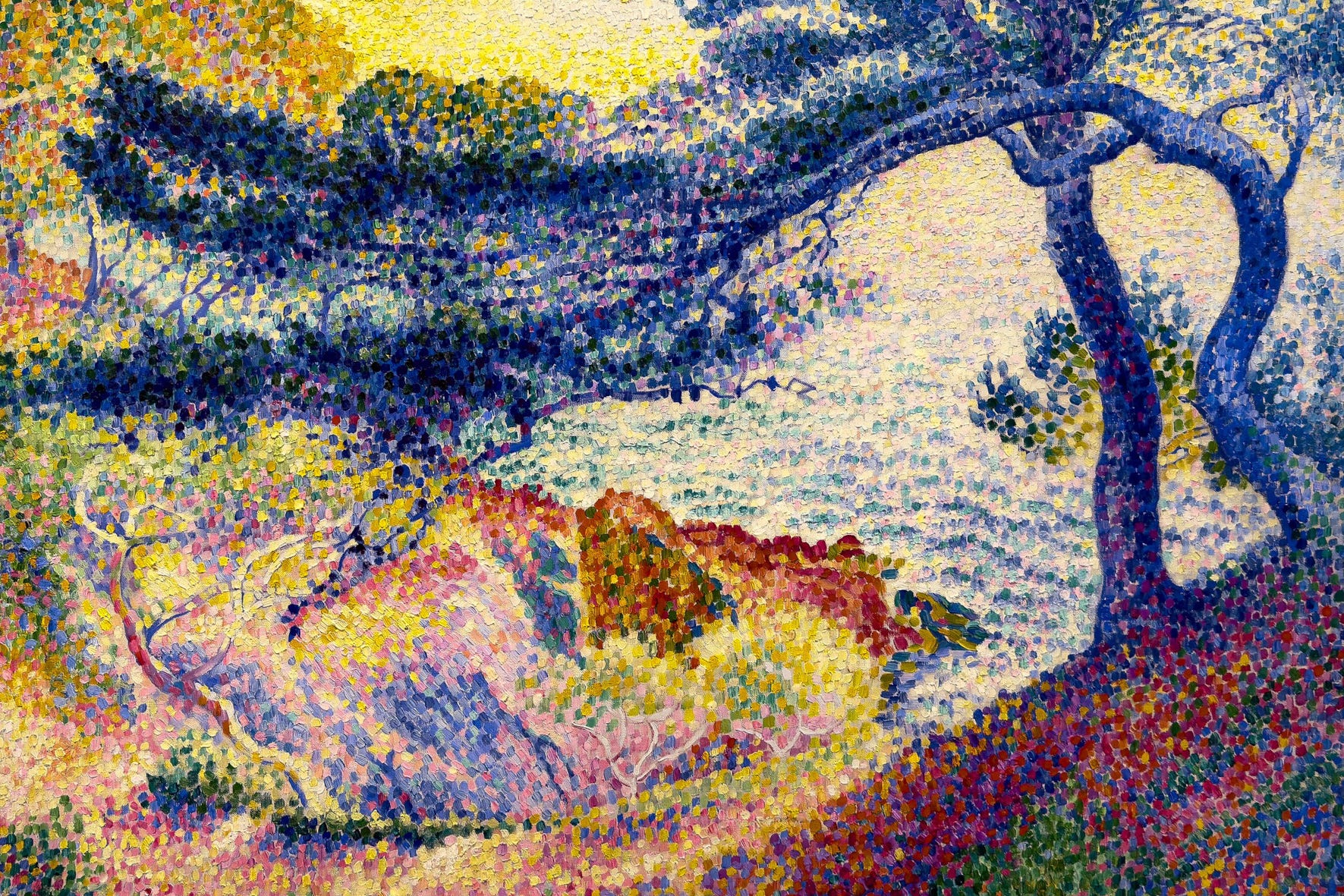
396. False Necessity
When certain ideas have been codified into systems that form the foundation of our society, we feel obligated to act in ways that align with those ideas. These actions feel necessary to us — we feel we must take them in order to survive. We must, for example, align our actions with the demands of our economic system in order to obtain the resources we need to go on living.
This narrow sense of necessity often expands into a more general form. We start to think that it is not just particular actions that are necessitated by the system, but that the system itself is necessary. We start to believe that there is no alternative to the way we’re already doing things and that we must carry on in this way.
Of course, nothing could be further from the truth. Any system made out of rules and norms is one that human beings have created, and its further existence is conditional on our agreement to continue using it. All of the ideas and beliefs that underlie such a system are also contingent in the same way. We could at any time choose to create an entirely different system, which means the perceived necessity of any human-created system is always an illusion.
At the same time, there is something truly necessary. It is the necessity of meeting our many needs. When we are distracted by the false necessities of our created systems, we’re unable to give our attention to the needs present in ourselves and others. The result is that we produce incredible suffering not just for ourselves but for everyone else too.
By systematizing our actions we have also systematized suffering. We have come to see suffering as something we must necessarily endure because our systems compel us to produce endless amounts of it. They do this by distracting us from actual need, and when need goes unmet, suffering always follows.
While we must sometimes take harmful actions just to survive within our existing systems, we must also try to bring this harm to an end. We must free our attention as much as we can, so that we can better see need and the true necessity of responding to it.
397. Paradoxical Truth
As our awareness expands, our understanding of truth changes. We begin to realize that we cannot talk about truth without also invoking paradox. We see that the subject passes into the object, the permanent passes into the impermanent, the multiple passes into the one, and so on. Even the feasibility of meaningful distinction between entities seems threatened by paradox, and we start to question our ability to denote truth.
What we eventually discover is that we can only talk about truth within the conventional world constructed by human beings. Within this system, what is true is entirely dependent on the conventions we use. Language, which is at the heart of this conventional world, cannot directly reach truths that lie outside of that world. But language — not merely as words and grammar but as all normative convention — is our only means of communicating with others.
The consequence is that our ability to share truth is limited to the normative structures that we share. But we also know that these normative structures can be used to indicate something beyond them through metaphor. This is what all art does, and we can see this most clearly in poetry, where words become a means towards a beauty that transcends language. The presence of paradox should not dissuade us from trying to use language to express ultimate truths, but we must accept any such attempt will always bring paradox with it.
A further implication is that contradiction does not mean ultimate falsehood, but merely a problem within our system of conventions. That contradictions arise when we try to talk about ultimate truth is only a consequence of using the tools of language to do something they are strictly not able to do. Contradictions are not points of failure but rather evidence of paradoxical truths breaking through our human-constructed system. It is by accepting paradox that we also learn how to get free of language and allow ourselves to respond more immediately to what we intuitively see.
398. Something Has To Change
She feels lack in everything that happens to her. It doesn’t matter whether it’s an experience she chooses for herself or one that is required of her. It doesn’t matter whether it’s something she wants to avoid or something she desperately desires. Always there is some unnamed thing missing, which means all of her experiences are tainted with dissatisfaction.
What is missing, she does not know, but she knows it’s missing and this causes her incredible frustration. Nothing ever feels as full or enjoyable as she thinks it should. At the very best, she feels a little happiness here or there. But she knows there is also a place beyond happiness, a place somehow more full than happiness, and maybe this is what she needs.
She thinks this must be a place free of pain. For that is how her frustration manifests, like a pain that cannot be placed, a pain that has almost become part of her existence itself. She thinks this pain has to be eliminated for everything to feel right. She wants the satisfaction of total rightness. That would be the opposite of whatever she is now. Now, nothing feels right. Now, there is always lack.
Something has to change. Something about the way she is or the way she is living. She knows this, so she tries to introduce changes. She tries to meet new people, to go where she has never gone, to participate in new activities. But none of this does anything for her. She remains the same no matter where she goes or what she does or who she sees.
Still, she hasn’t given up. The change she needs must just be a deeper one, she thinks, a kind of change that she does not yet understand. The possibility of a deeper change is more than a little scary, because she doesn’t know if she even can change to that degree. And yet, when she feels a little braver than usual, a little clearer than usual, she thinks she might just be able to lift herself into an entirely different way of being.
399. Enabling Creativity
To be creative, I need to be loose. When I’m preoccupied with achieving a good outcome or with following a specific method, I’m too rigid to fully express myself. I become incapable of following the intuitions that arise from my awareness — the very intuitions that would help me create an artwork that is both vibrant and beautiful.
If I can notice my rigidity then I can do something about it. I can release myself from the intentions that are distracting my attention and impeding my ability to be creative. In this way, enabling creativity is the same as enabling compassion. When my attention is distracted by attachment to particular intentions, it is taken away from what I most need to see. By loosening the attachment, I become capable of adopting a more compassionate mode of being, which is also a more creative mode of being.
As my attachments limit my attention, they also produce suffering, which can further inhibit my creativity. When I’m suffering, I feel compelled to react to that suffering, and in doing so, I deepen my attachments, which further distracts me and causes even more suffering. When I’m completely trapped in this cycle of suffering, I can become so rigid that any kind of creativity feels impossible.
Only if I’m able to notice that I’m stuck in this cycle can I also break free of it. By recognizing that I’m distracted, I gain an opportunity to temporarily release my attention. This allows me to investigate my suffering and my attachments more closely, which helps my awareness broaden and deepen. When I can see my attachments and their consequences clearly, I can also see how they can be loosened in a more lasting way. And when my attention is always free and loose, I then become capable of incredible creativity in every moment.
400. Prophets Among Us
If you said you were a prophet, would anyone believe you? People would think you were joking or maybe just seeking attention. If you told them you were serious, they might think you were crazy. They would not think it possible that you could see the future or tell us about it.
The possibility of there being prophets among us is something we have generally ruled out. It does not seem realistic that there could be human beings capable of seeing more of what is to come than we can. We know there are many who have claimed such things in the past, only to have later been shown to be spreading nothing more than vague tautological truths or provenly false delusions.
But you, the one who sees what is to come, are not vague or delusional. You see something specific about the way the world must be and you feel the urge to share your vision with others. You can see what others have missed because your awareness is heightened in this one area. Your fault, if you have one, is that you believe in your vision so strongly that you offer it to us in stark terms: this is what the future will be.
Such a pronouncement feels too presumptuous for us to accept. It feels that way because we cannot see the necessity of what you are seeing and saying. For you then, the challenge is obvious. If we cannot see, you must help us see. There is no other way to bring us around to what you already know to be the truth.
You must create whatever is necessary for us to share in your vision. You must show us the way towards the awareness we do not already possess. Only in this way might we reluctantly agree, long after you have been proven correct, that you were, in fact, a prophet. And it is precisely in this way that every great artist has been and continues to be a prophet.