
“Being Empty”, etc. (341-345)

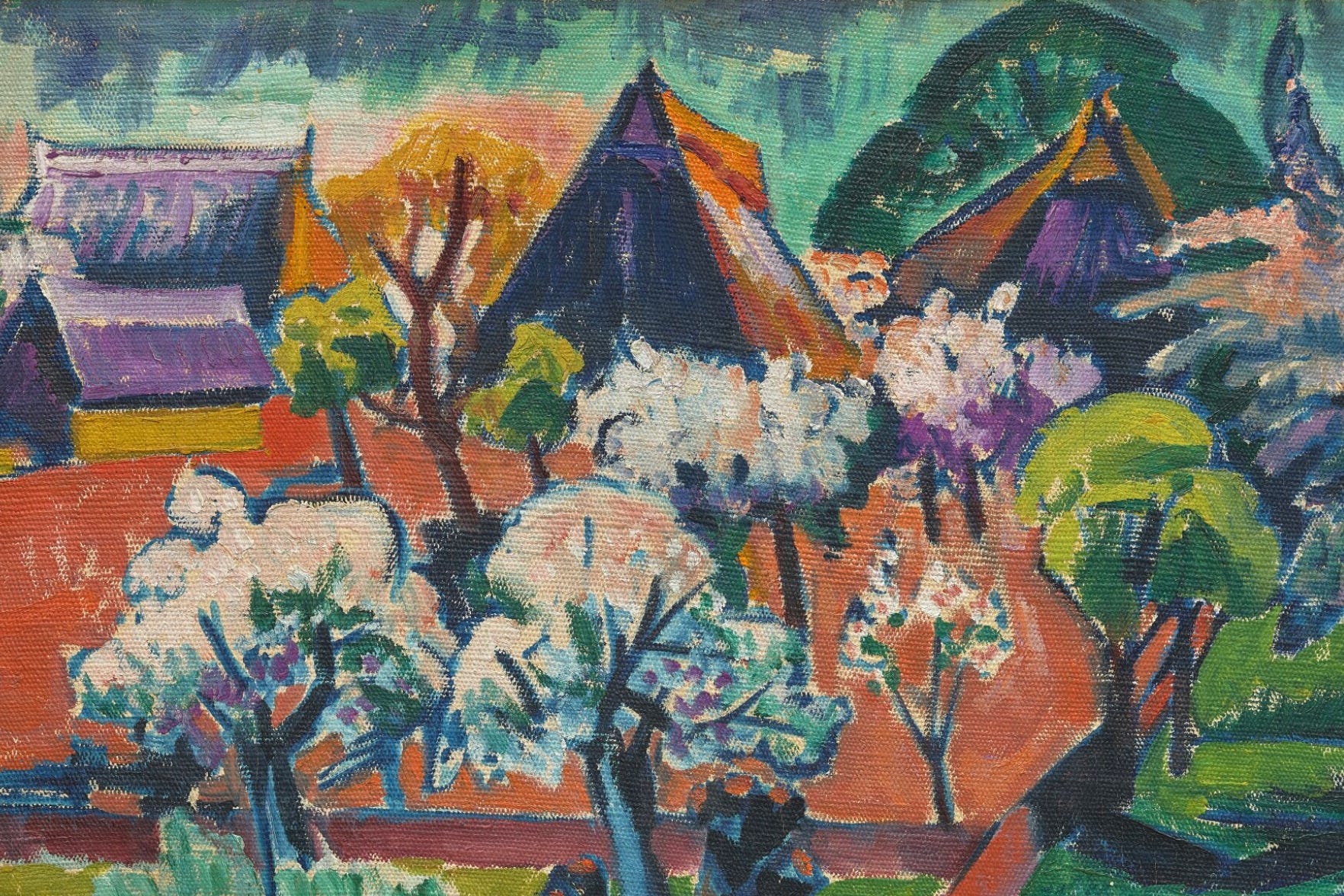
341. Being Empty
Everything you experience is both you and not you. When you see an object in the distance, the perception is yours, but you can also be free of it. When you have a thought you believe is true, the idea is yours, but you can also be free of it. When you have a desire for something useful, the want is yours, but you can also be free of it. When you are afraid of a dangerous outcome, the fear is yours, but you can also be free of it. When you feel despair because you have lost sight of hope, the anguish is yours, but you can also be free of it.
To see that each of these things is both a part of you and not you at all is what it means to be empty. When you are empty, you are free. You allow everything to arise and depart in its own time. You see that everything that happens is both permanent and subject to change. You see the world as both a collection of separate parts and a unified whole. You understand that the experiences of living beings are your experiences and also that you are separate from the particulars of every experience.
To be liberated from the objects of experience is what it means to be empty of attachment. When you are empty and liberated, you can see everything clearly. You see what you need and what others need, and you see that it is personally necessary for you to take action to meet those needs. Your every action is then creative and intelligent. You help to meet the needs of living beings, and by doing so you support and advance life itself. As a consequence, your actions are immensely purposeful and therefore also immensely joyful.
To live always in perfect emptiness is not a tangible goal, but an aspiration demonstrated through your choices. By seeing the importance of seeing itself, you regularly open yourself to the expansion of your awareness. And it is the growth of your awareness that will bring you closer to this great emptiness that is also the place of boundless compassion and unceasing joy.
342. Casting Blame
When something goes wrong, one of the first things we do is figure out who is to blame. We do this to hold people accountable, so that they’ll take responsibility for what they’ve done and work towards improving their conduct. But often what we’re also doing when we cast blame is redirecting attention away from ourselves.
We do this because we want to feel absolved of responsibility. We want to feel certain there wasn’t anything we could have done to prevent the wrong from happening. We want to affirm our own righteousness over the wrongdoers who are not like us. We want to assert that we could never do anything so terrible.
But in truth, we’re always responsible. We might not have directly caused these particular wrongs, but we are still responsible. We are responsible because wrongdoing ultimately happens because of suffering, and everyone is responsible for all of the suffering that exists.
In the absence of meaningful suffering, our needs would be adequately met and there would be no motivation to harm others. Harmful actions are taken in reaction to suffering whenever awareness is lacking. As long as suffering exists, wrongdoing will also exist.
As we become more aware of ourselves and our world, we discover that all suffering is shared. We learn that the suffering others experience is no different from our own suffering and we begin to feel it as our own. We learn that the distinctions between individuals are not meaningful when it comes to the cycle of suffering that drags us all down.
When suffering is endless, responsibility is also endless. To try to discard it would be to wrongly assert that we are better than those who do wrong, when in reality every wrongdoer is also us. To cast blame as a way of absolving ourselves only enhances our complicity in perpetuating suffering.
With greater awareness, we come to see blame as narrow and limited, its purpose being only to assert the immediate connections between motivation, action, and outcome. It is these connections that we must see more clearly and broadly in order to begin to address our shared suffering and the harmful consequences it produces.
343. Absorbed By It
He didn’t expect to visit the art museum that day. He was called into work because of an emergency, but soon after he got there, they discovered the problem was outside his area of responsibility and he wasn’t needed. He was annoyed and on his way home when he saw the sign advertising free admission.
He wandered in with no knowledge of the current exhibition and no expectations. He didn’t even know where to go or what to see. He simply followed the other visitors, going wherever they went and seeing whatever they saw.
He would pause for a moment or two in front of each artwork and try to discover something in it. The others seemed enraptured by certain pieces, but he couldn’t understand what they were seeing. They were nice paintings and that was all. Or at least that was what he thought until he saw it.
It was a piece unlike the others. Not only was it more exciting than the rest, he found he couldn’t pull his eyes away. It was undeniably beautiful, but it was also more. It seemed to be saying something he needed to hear. It was telling him a secret that he somehow knew was absolutely true.
People came and went while he stood there in awe. Some would stop to look more carefully, while others offered it nothing more than a quick glance before waddling off. Fools, he thought, they can’t see what they’re missing!
After an unknown amount of time, he began to feel self-conscious. He was still standing there, slack-jawed, absorbed by it, and shouldn’t he move on to the other pieces? But move he could not. He could not bring his attention to another artwork for more than a second. His focus was still locked on it, even when he couldn’t actually see it.
Finally, he decided that fighting such a powerful feeling was ridiculous, and he allowed himself to return. Again it was majestic, again it spoke to him clearly. He felt connected to it and this connection brought him a kind of joy he could not recall feeling before. He realized he had been hungry his entire life, and only now had he finally discovered food.
He stayed with it until he was forced to leave, and even then he felt he could not go. The security officer had to remind him twice that the museum was closing. Eventually he acquiesced, but not without a sharp feeling of loss. He vowed to return the next day after work, to see if it would still be the same.
344. To Love The World
To see the world is to love it. As I become more aware of the world and myself, the distinction between the two begins to blur. I cannot stop seeing myself as an entity separate from the world, but I can now also see myself as continuous with it.
In the same way, I start to see the experiences of others as not wholly separate from my experiences. Everything that happens to every other person also happens to me. Everything that others do is also something I do. Everything valuable in me is also valuable in others.
Seeing these continuities, I feel driven to respond to the needs of others just as I respond to my own needs. This is the necessity of compassion, which arises directly from awareness. Compassion towards others (and the world itself) requires nothing more than attention to experience, which itself creates awareness. As my awareness expands and deepens, I become capable of intuitively recognizing need and I feel more strongly the necessity of responding to it.
To love is to appreciate the value of another and to act in support of that other. As such, there is no meaningful difference between compassion and love. Attention creates the awareness that gives rise to compassion, which is also love. By seeing more of the world and its unity with myself, I come to love the world more.
Even those parts of the world that seem ugly or wrong must be met with love. For my compassion and love are not allocated based on merit or worth. They are not withheld on the basis of mere belief or judgment. They are given entirely in response to need and necessity.
My own awareness shows me that the needs of all living beings must be met to free all of us from perpetual suffering. By seeing the world in whole, my love for it grows, and I help it towards its own awareness, which in turn helps the love of compassion spread to every corner of life.
345. The Artist’s Awareness
Every artwork we encounter offers us an experience that can broaden our awareness of ourselves and the world around us. The artist is able to give us this gift because they are already aware enough to be capable of sharing their awareness.
The artist’s awareness grows because they are paying attention. They are watching everything that is happening in and around them, as well as exploring the creations of other artists. They must observe and absorb everything, as they cannot know in advance what will be most important to their own art.
Awareness expands with each and every moment of sincere attention. And it is awareness that brings the intuitions that motivate the artist towards new forms of expression. Not only do they become more cognizant of the possibilities of their medium, they also become better capable of communicating their experiences through it.
Attention is thus the single most important factor in becoming a more expressive and capable artist. But the artist must be careful not to confuse attention with controlled focus. Whereas controlled focus limits perception to specific objects, awareness expands when the attention is open and free. This means that it must be permitted to wander, without being restricted from looking at anything, including the parts of the self that are most embarrassing and the parts of the world that are most terrifying.
Openness of attention enables the artist to see beauty that has previously escaped notice. And when the experience of these unappreciated aspects of reality becomes salient, the artist’s intuitions push them towards the creation of bold new artworks.
The only choice the artist must make for their awareness to expand is to release their attention from attachment to particular intentions. Once freed, their attention will naturally gravitate towards what has not yet been fully seen, and it is these discoveries that will form the heart of the artist’s most powerful works.