
“Anxious Attention”, etc. (381-385)

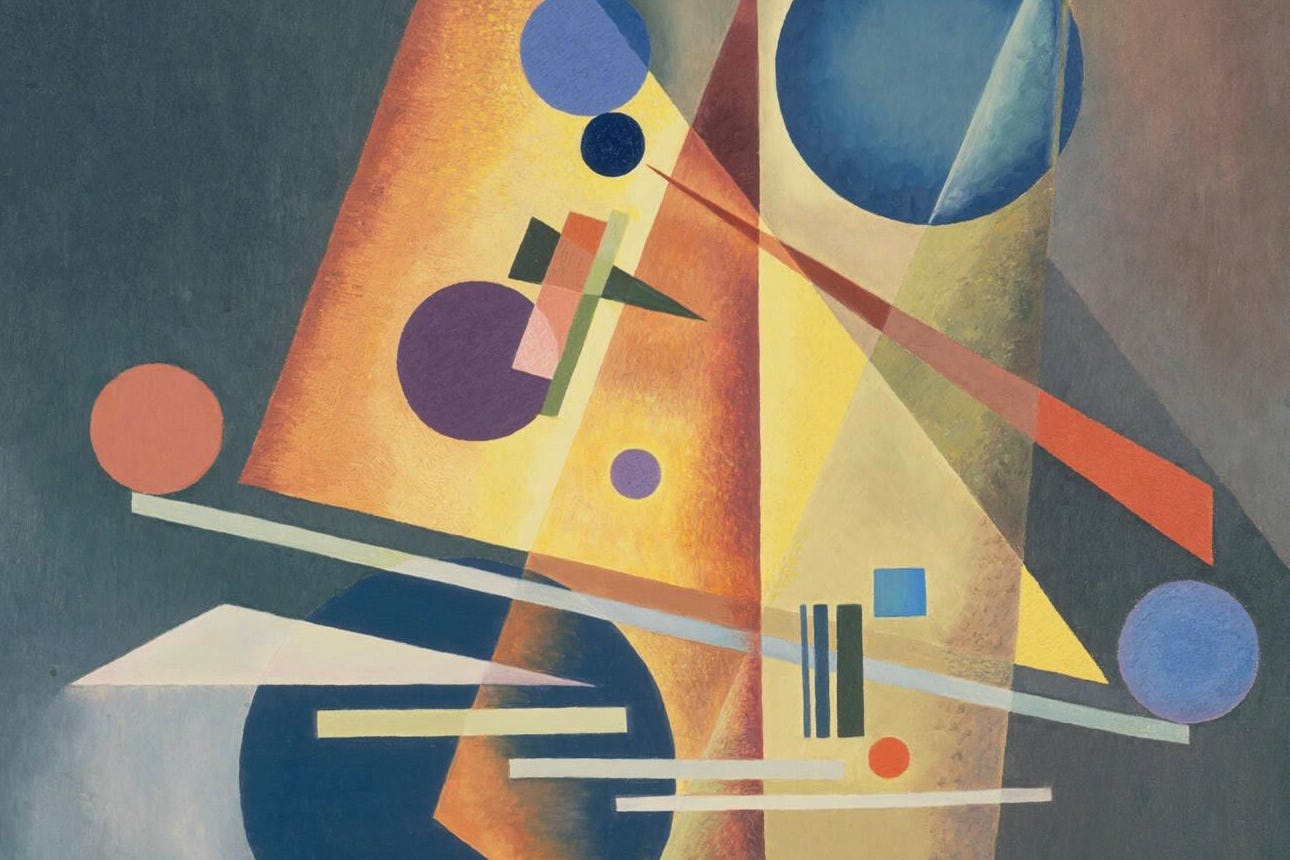
381. Anxious Attention
You see a flash of movement somewhere in your field of vision. It’s quickly followed by another flash and then another. Something is happening and it has grabbed your attention. Rapid movements suggest the possibility of a threat that could potentially bring harm.
If this possibility were sustained over time, it would be natural to start thinking about how it might hamper your desires, activate your aversions, or contradict your beliefs. You would be concerned that the new thing could impact your life in some meaningful way. And because the potential for harm feels real, you might also believe you should continue to pay attention. Worry pushes you to gather more information and figure out what’s happening.
But there is a difference between seeing something clearly and being distracted by it. For if you realized that the flashes of movement were produced by nothing other than a circling fly, then obviously there would be no point in paying attention to the random shifts in its flight path.
To see clearly is to grasp the reality of your present situation and understand what must be done in response. But such a response cannot include holding your full attention on mere flashes of movement. If you did this, you would be too distracted to see what must be done to alleviate harm and meet the needs of yourself and others.
Seeing everything does not mean seeing every last detail of it. Details can easily become distractions, especially if you become preoccupied with tracking every last change when the changes are insignificant. If you’re already broadly aware of the present situation, then perpetually monitoring it can do nothing to help.
Instead of being distracted by trivialities, you need to allow your focus to return to those creative and compassionate actions that are the solutions to the real problems you face. It is only through the application of immense creativity and unyielding compassion that it becomes possible to address the real sources of harm.
382. The Universe Of Dreams
In this universe, you are a substantial self that relates to a separate world using knowledge and language. In the other universe, you are completely empty of content and the world is also you.
In this universe, you know exactly what you are and what you are not. In the other universe, you are everything and nothing at the same time, which means you can be something completely different in each moment.
In this universe, the world is reducible to a set of facts that follow from one another, and it is therefore limited and final. In the other universe, the world is magical: it is always more than you have seen, and it can surprise you at any moment.
In this universe, events are spread out and there is time between them to pause and reflect. In the other universe, everything flows felicitously from one event to the next.
In this universe, what happens is logically determined through cause and effect. In the other universe, happenings take place through a strange continuity that lacks explanation.
In this universe, past events are remembered and recalled, which means the present is always contextualized by the past. In the other universe, little is remembered but the present never feels out of place.
In this universe, everything that happens is mediated by thoughts about its happening. In the other universe, there is no room for thought, only attention and action.
In this universe, even the most intimate moments are accompanied by memories of the past and considerations of the future. In the other universe, every experience is total presence, which means intimacy is total contact: sublimation into the other.
In this universe, certain perceptions and thoughts cause you to doubt the reality of your experience. In the other universe, you doubt nothing and every experience is exactly what it is supposed to be.
We call this universe the one of reality and the other universe the one of dreams, but which universe is more real?
383. Never Hold Back
Whatever happens, she never holds back. She always speaks everything she feels as sincerely as she can. She doesn’t see any point in doing less. She could try to pretend to be something she’s not — maybe then she would be more liked and accepted. But what good would that appreciation and acceptance bring? Wouldn’t it mean that she’d have to continue playing the character others expect her to be?
No, she has to express herself in full. She’d rather be honest and let people ignore her if they don’t like what she has to say. For her, this provides an automatic filter. Anyone unable to tolerate her sincerity won’t make it through, which means she’ll be free of them and them of her.
Of course, she also knows too much honesty in the wrong places can cause harm. She tries to minimize this by avoiding those who are not as open and sincere as she is. She knows that there are many who need the protection of masks and they will not respond well to someone like her.
But in general, she feels there isn’t any purpose in forming relationships where there’s anything less than total honesty. Complete openness and unrelenting sincerity is what makes her life exciting. For living like this means she’s always taking risks.
She follows her intuitions wherever they lead her, and if they tell her to take a gamble, she goes for it. If she meets someone she likes, she doesn’t keep anything back. She makes all of her feelings known, even though she might get hurt. She accepts the risk because she trusts everything will work out the way it’s supposed to work out. If the other person doesn’t like her, then it wasn’t meant to be. The loss is sometimes painful, but she wouldn’t have it any other way.
When she does manage to connect with someone, she immediately knows it’s real. She knows this because she has been honest, and her own honesty helps her see it in others too. The connections she forms are powerful and they fill her with an excitement that makes her feel truly alive. And this feeling reminds her again and again that it’s best not to hold to back.
384. The Joy In Beauty
When I see something beautiful, I’m stopped in my tracks. It’s the shock of beauty itself that causes this arrest. Sometimes it’s something I’ve literally seen, so I stop to look at it more carefully. On other occasions, beauty reaches me through another mode of perception — it’s a beautiful sound, scent, flavour, or texture that I experience.
In every case, my attention is fully captured by the beautiful, which surpasses everything else in my immediate surroundings. I want to perceive as much of it as I can, for I cannot escape the feeling that by observing, it will be brought closer to me. I want to become one with the beautiful other. I want to incorporate its beauty into my own self.
The experience of beauty is always joyful. It seems to meet some profound need that lives inside me. At the same time, the beautiful transcends whatever pleasure it brings. It seems to indicate a greater truth about the world or the being that I am. I may not know what this truth is, or be able to put it into words, but the simple act of observing the beautiful adds to my awareness.
In meeting my need for awareness, the beautiful provides even more joy. I learn something new about the world around me, and in seeing this, my experience of existence broadens. I grow into more, and this growth is itself a joyful experience. It is no mere passive transformation — the beautiful, by expanding my awareness, also demands a response.
Through the experience of beauty, my choices and actions are transformed. I see more of what is true and I understand a little more of what I must do. The beautiful not only supplies the gift of immediate joy through the experience of it, it also shows me the path towards a more joyful life.
385. Texts As Stories
Every text is a story and every writer is a storyteller. Even the most conceptual, theory-laden, abstract text is still a narrative. For every text weaves together disparate elements into a cohesive structure using the norms of language in exactly the same way as we tell a story.
A text is a means of connecting a series of normative entities called words in order to reach a specific end, and as such it is itself a normative entity. Just as a story shows how one event leads to the next in a plausible fashion, an abstract text shows how its conclusion is reached through a chain of premises and logical inferences.
But not every text will align with our expectations or be entirely rational. Even in our most cherished stories, we allow for the chain of causality to be broken. We accept that the narrator cannot see what is coming next and that random events can happen without warning. In this way, our norms are broken, our expectations are defied, and we are shown an entirely new possibility.
We are shown that a text never has the completeness or finality that it might seem to possess. There is always something beyond it — a kind of truth that it can point to but never contain. For a text that is recognizable as a story, this is no surprise. We know that a story is always a metaphor, which means it shows us something about our experience that we would not be capable of grasping through more direct explanation.
This is also true for the most theoretical and abstract text. It is also always a metaphor for something else, for a world that has been glimpsed but that cannot be described. This is the world of beauty, truth, and goodness itself. But as we can never directly encounter this perfect world, we cannot expect our metaphors to always reveal truth.
When we read a story, we know that it describes only one possible chain of events. We automatically doubt that what happens to the story’s characters would also happen to us in the same way. It is this doubt that we must bring to the theories our abstract texts offer. We must doubt the conclusions they seem to suggest are absolutely certain. By doing so, we ensure our freedom from the normative structure of the text, which in turn allows us to reach for beauty, truth, and goodness again and again.
"more real" catches, like comparing infinities. this world, that world. inner, outer. one world shared by {imposing}, extending to, grasping. the other shared by waiting for the waves to roll in.